
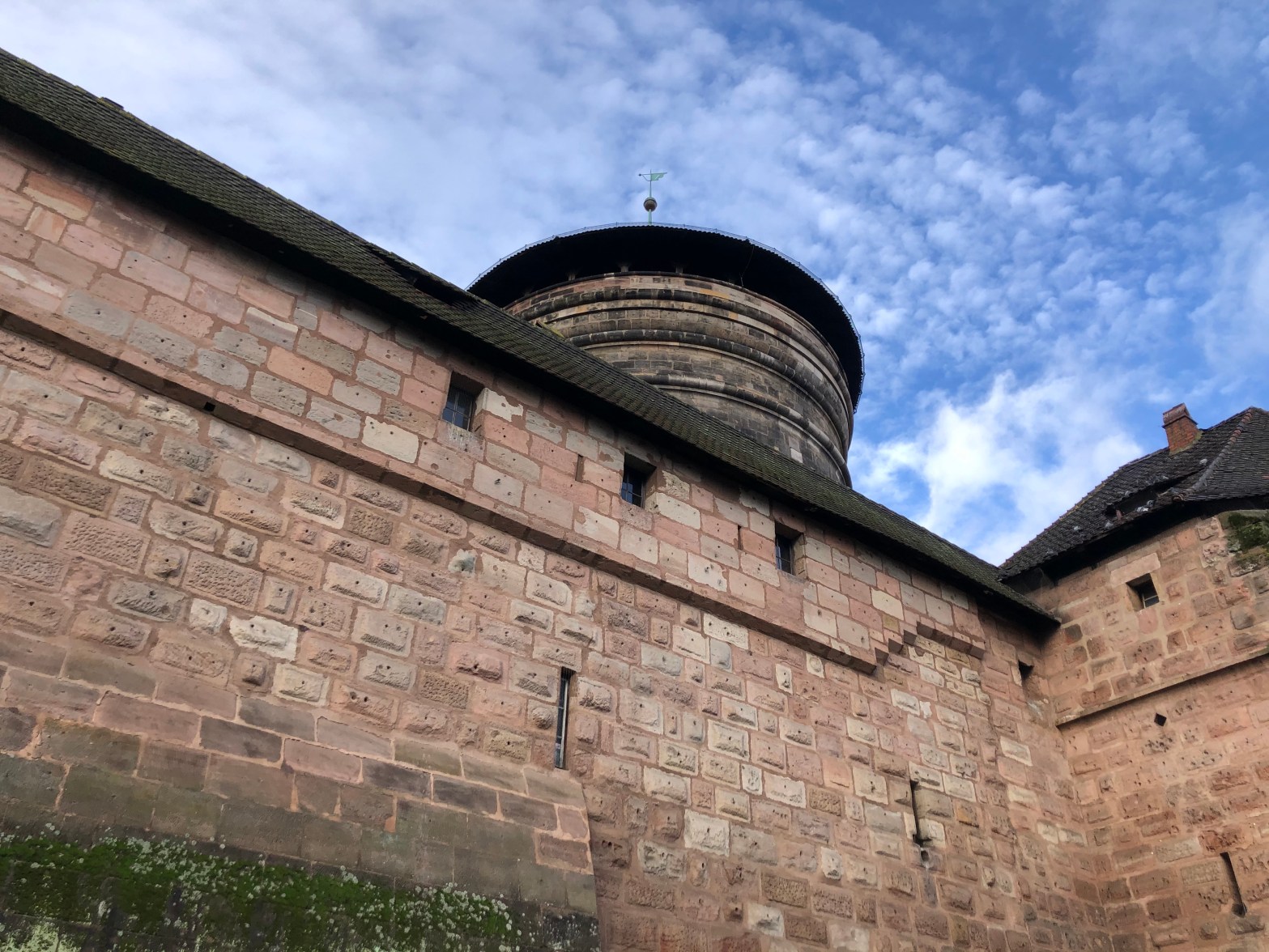


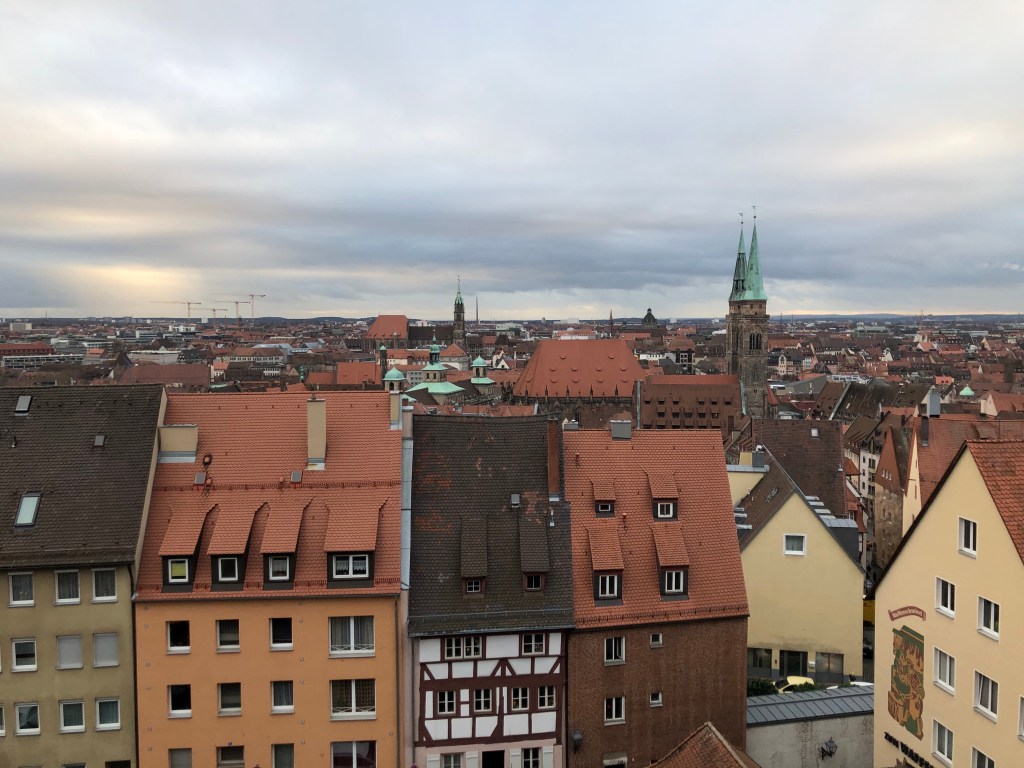
On the weekend of my birthday, my girlfriend, Sandra, met me in Germany, and instead of staying in Wolfsburg, we decided to travel to a different German city. When we were deciding where we wanted to go, I gave her a list of a few different cities and towns in Germany, some of the highlights on that list being Hamburg in the north, Munich in the south, and Nuremberg between the two. All three places are large cities in Germany, but each with a different aura to them. Hamburg is a port city in the north, Munich the cultural center of Bavaria in the extreme south, and Nuremberg a historical, cultural center with a complicated past, with an intriguing medieval city center. The last of the three seemed the most interesting, so we booked train tickets and our accommodation, and we were ready for our trip.
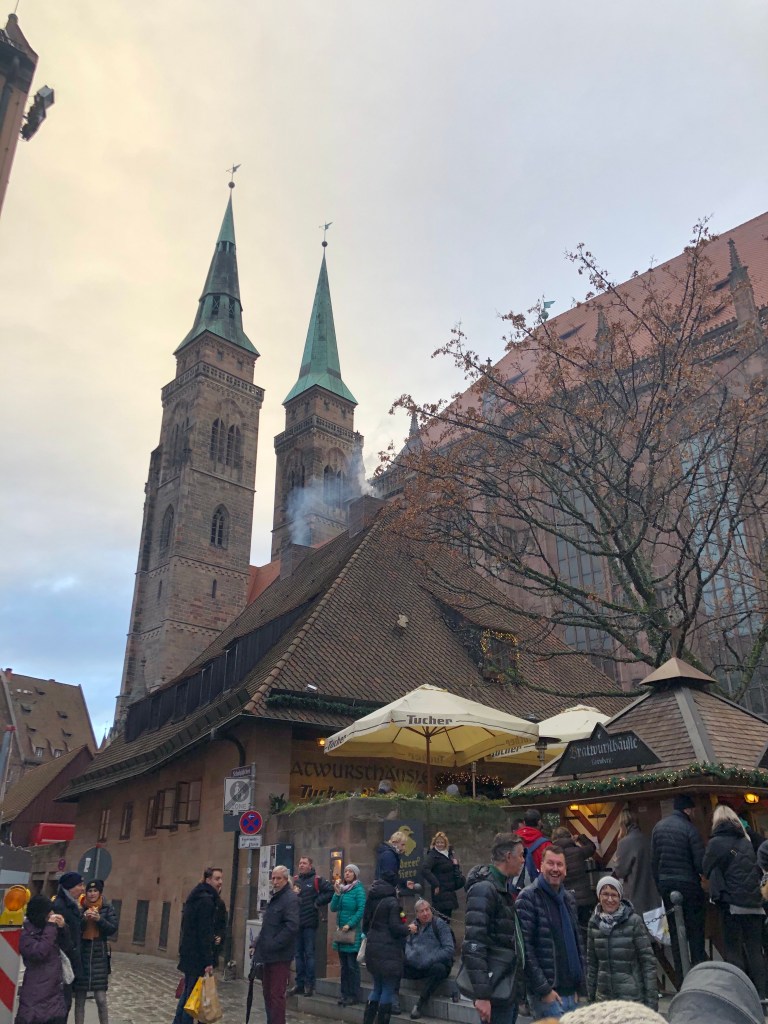
The first thing we saw when we walked out of the underground tunnel leading out of the train station to our surprise was a large, cylindrical tower, making up one corner of the old city. In World War II, several major German cities were severely bombed by Allied Forces, which left them severely damaged and a lot had to be rebuilt. Cities then had to make a choice; would they rebuild the medieval-style buildings, or would they modernize their cities and build anew? Nuremberg decided to rebuild the old, and it brings a unique charm to the city that other cities in Germany do not have. Sure there are some modern office buildings outside the city walls, and there are some newer buildings within as well. But the decision to rebuild the old was the right choice for Nuremberg, just because the way the city is organized called for that decision.
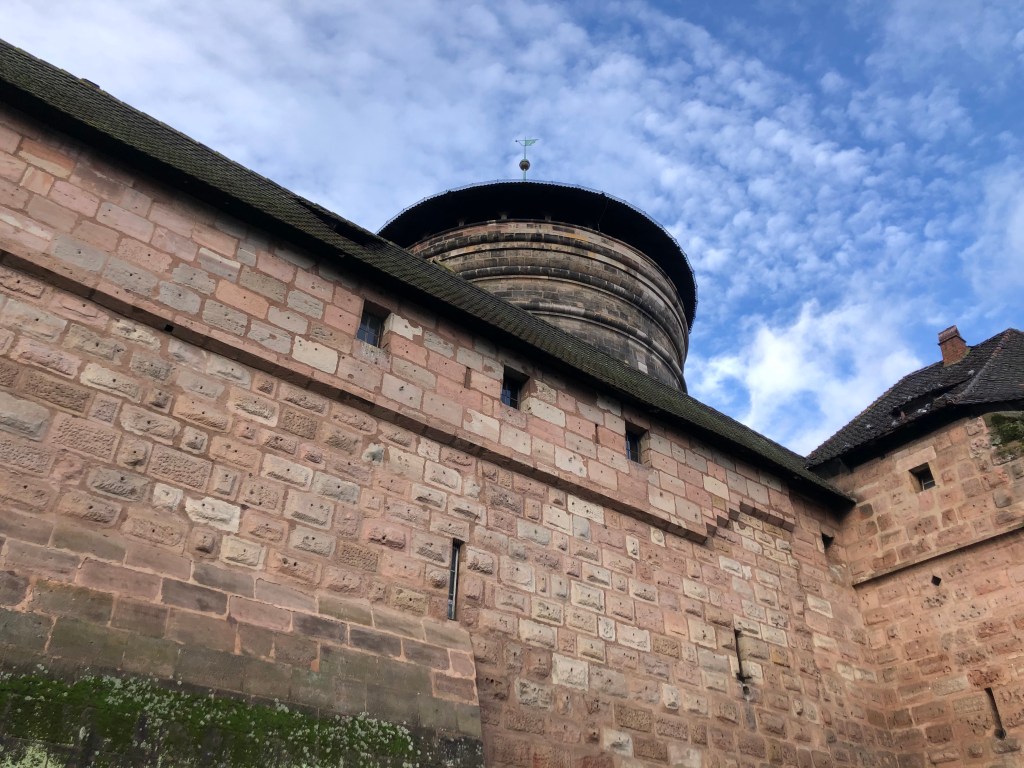
To give a short history of the city, its origins date back to the early 11th century when the Imperial Castle was originally built. The city was one of the many seats of the Emperor of the Holy Roman Empire, which was meant to be a symbolic continuation of the Roman Empire of ancient times. This “empire,” however, was nothing more than a loose confederation of free German city-states, as Germany wasn’t united as a nation as it is defined today until 1871. Nuremberg was a powerful free city in the region of Franconia, and had its own autonomy until the early 19th century, when it was absorbed into the Kingdom of Bavaria. In the interwar period, Nuremberg gained a symbolic importance to the NSDAP (Nazi Party), as it was considered “the most German of German cities,” and later became the host city of Nazi Party rallies. After the war, the city ditched its industrial past, and turned toward tourism as its main industry, as it attracts millions of visitors every year, especially in the winter, for its world renowned Christkindlsmarkt, or Christ Child Christmas Market.
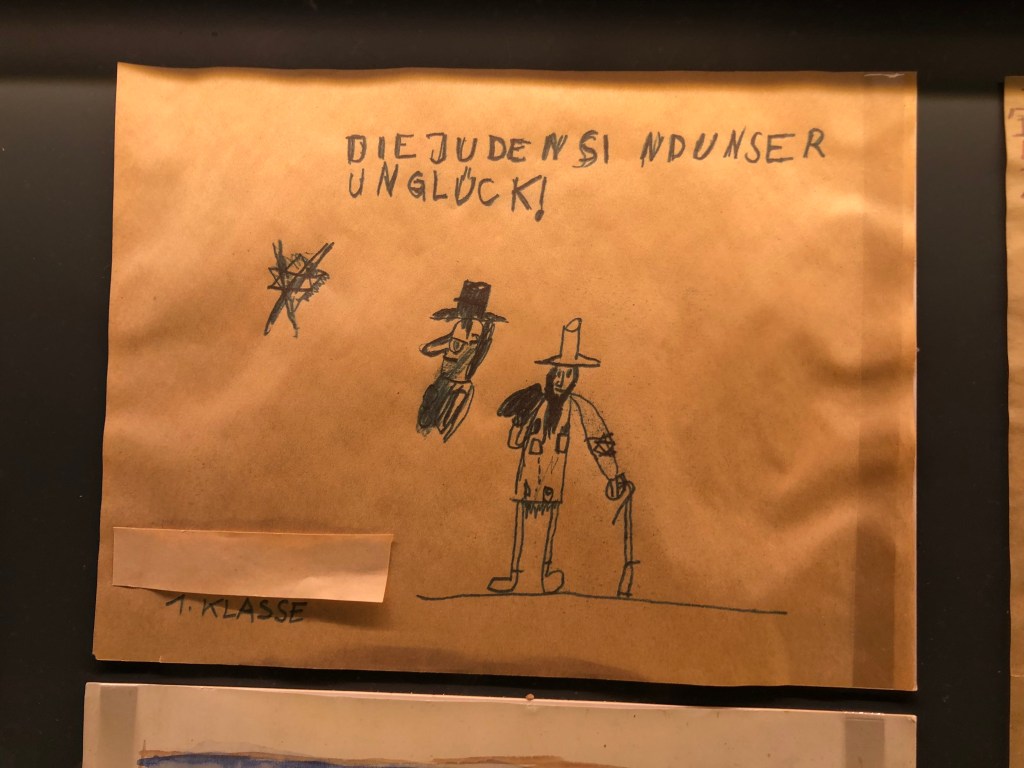
The city, teeming with history, was certainly worth the visit. The old town center filled with different Christmas market stalls selling various German festival foods such as the Nürnberger “3 im Weckla” (three sausages in a bun), Flammkuchen (a German-style pizza), and a glass of warm Glühwein (mulled wine). And the old buildings, some with mini altars to different Christian saints attached to them, and some with paintings depicting different biblical scenes, are things that distinguish the city from others in the country to which I have been. As a student of German in college, however, I think the biggest draw to the city for me was the Documentation Center, which is a historical archive of the activity of the Nazi Party in Nuremberg, and of the Party rallies that took place in the city during the interwar period.
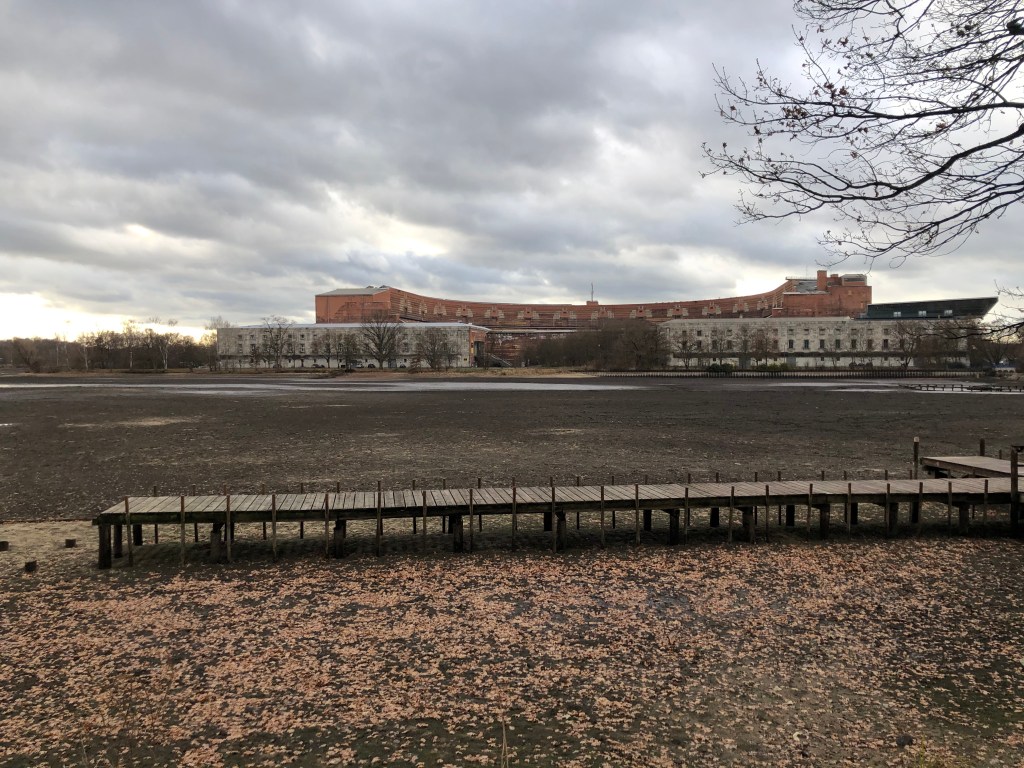
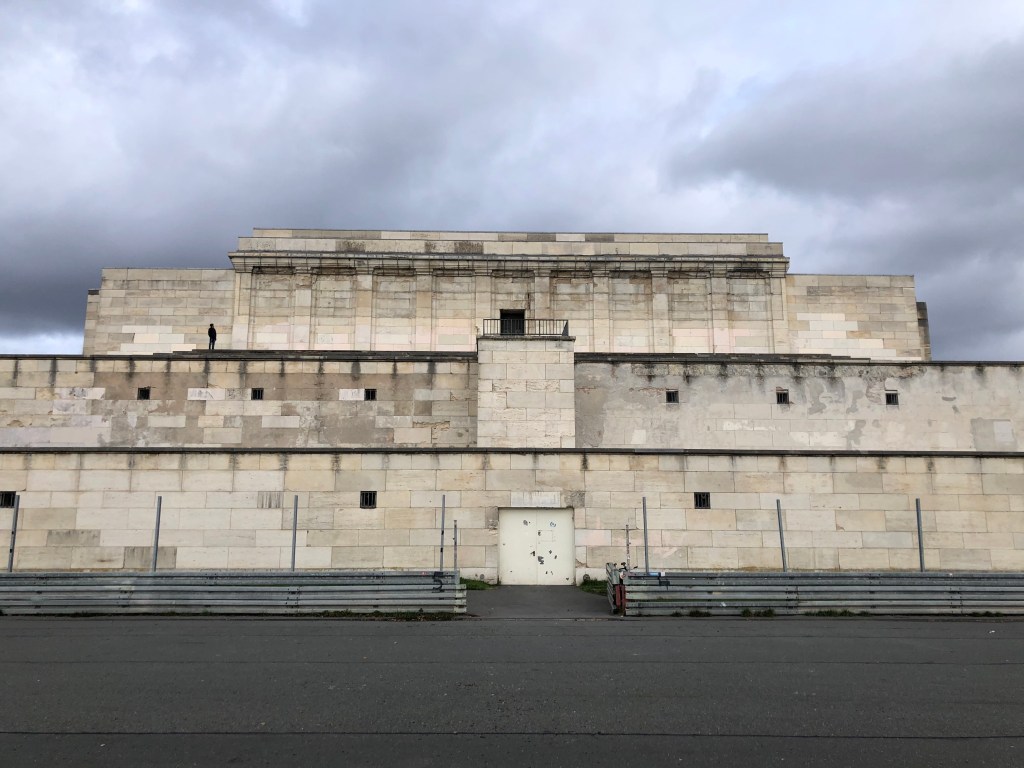
Having gone over this period of history several times during the completion of my degree in German Language and Literature, I thought I had learned a great amount about the Nazi Party’s rise to power, and how they were able to take control of every aspect of German daily life in the 1930s. It wasn’t until I came here saw the massive rally grounds, taking up far more space than the old city itself, that I got a true understanding of the scale of the efforts that Party leaders undertook to make their ideology the only ideology in the country. To have walked and stood in the buildings where high-ranking Nazi officials have walked and stood, to have seen the areas where hundreds of thousands of Party members had once stood, gathered orderly in regiment-style groups, worshipping a leader without questioning the legitimacy of his claims, gave me such a sick feeling that I even have chills thinking about it as I write this sentence.
In school I learned about the numbers behind the Holocaust, behind the growth of the Nazi Party in Germany, but this visit to the Documentation Center and to the buildings of the former Nazi Party Rally Grounds allowed me to put those numbers into context, which is something I find absolutely necessary to fully comprehend the atrocities that occurred during World War II and the Holocaust, and to empower people to speak out and take action against atrocities and violations of human rights that are occurring today.
When it came time to leave Monday afternoon, Sandra and I were quite sad to leave this city. It is a city with character and one with such historical importance to the world today. Almost fittingly, our favorite site in the city was the Straße der Menschenrechte (Way of Human Rights). On this street, there are 30 pillars, one to represent each of the 30 articles of the Universal Declaration of Human Rights, adopted by the United Nations three years after the end of World War II, with each article being expressed in both German and a different language, one different language for each pillar. What was once a city of symbolic important to one of the most evil and atrocious regimes the world has ever seen, the city seems to have become one to educate those on the events of the past to those who look for further information, and one that currently looks toward a brighter future, where human rights are respected worldwide. It is certainly one of my favorite cities I have been to in Germany so far.


Great post 🙂
LikeLike
Bravo Tommy. Just finished reading. So proud of you!
>
LikeLike