Navigating German Bureaucracy/Banks

I thought it would be easy. As a new resident in Germany with a Hungarian citizenship, and thus being a citizen of the EU, I thought I would be able to slice through German bureaucracy like a hot knife through butter. However, even with all the research, even with all the advice I received from Fulbright Germany to get through all of the bureaucratic barriers, I somehow still managed to find a way to screw it up.

Let me first list the things that new residents in Germany, and more specifically Fulbrighters have to complete in order to be able to stay in Germany long-term.

  1. Register with the city that you’re living in (you receive a registration certificate from the town/city hall)
  2. If you’re not an EU citizen: make an appointment at the Foreigners Office (Ausländeramt) after which you will receive your long-term visa (Aufenthaltsbewilligung)
  3. For Fulbrighters, and it would help if you’re living in Germany for a while: open a bank account

It all sounds so simple until you find out that it isn’t. Fulbright Germany can only do as much as they can to prepare those not used to the system for the rollercoaster, so let me tell you about my experience.

The registration is by far the easiest step, yet it can be tricky. I went to the city hall in Wolfsburg with Veit, the teacher in charge of helping me adjust to the city, and it was a quick process. I was asked for identification and a document that proved I was staying in my current apartment, and after seven minutes I received my certificate of registration. However, the process isn’t the same in all cities. Officials in some town halls, according to some stories I heard from my colleagues, might ask for very obscure documents, such as one that states what town you were born in. Of course some people might not have that with them when they arrive in Germany, and the best advice I can give here is to ask if a teacher from the school could accompany you in order to better communicate with the official and maybe try to work it out with them.

In terms of the visa process, I’ve heard from many that this is probably the most difficult part. This experience can end up in a variety of ways depending on what you tell the official behind the desk and what that official wants from you. For some reason, some officials at the foreigner’s office might go on a power trip and ask you for documents that you’re normally not requested to bring, so for this step, it’s better to be over-prepared than to be simply prepared with what Fulbright tells you to bring. For Fulbrighters, I would suggest bringing any and all documents with information about what you’re doing in Germany, as well as any other personal identification documents you have. The more things you can show to the official, the better.

Now this is where my troubles come into play: opening a bank account. In the US, one can simply open a bank account online and receive their debit card and account information in the mail a few days later without any problem. In Germany though, there are a few steps. Depending on which bank you choose, you can open an account online or you can set up an appointment with a banker to open one. I opted to open an account with this one bank online, but I needed to identify myself either with a banker, with an app the bank uses for video-identification, or with a worker for the German Post. You can’t download the app if your AppleID or Google Play account isn’t German, so I opted to go into the bank branch and identify myself there. That was all fine and I was expected to receive my bank information in the mail.

One thing I had overlooked through all of this was the mail. In many European countries, you’re expected to clearly put your name on your mailbox. This was the cause of all my trouble: I didn’t label the mailbox with my name. And if this isn’t done, the mailperson won’t deliver any of your mail. So, instead of being able to access money within the week, I ended up having to wait about two and a half weeks to be able to access money I had already deposited into that account due to the lack of the necessary information like PIN codes and security information that I received in three seperate letters to fully set up my account.

So, if you’re overly prepared with documents and you remember to label your mailbox, you should hopefully be in the clear. But, then again, this is German bureaucracy, so you can never really know what to expect.
Fulbright Orientation: The Good and the Bad

This post might be a little more boring for those who aren’t interested in applying for the Fulbright Program, but if you stick to the end I promise you’ll see some nice pictures from those few days in a town on the outskirts of Cologne called Altenberg.

I had been in Europe for two long weeks before I had any official Fulbright business to take care of. Throughout the entire summer, I had been anticipating several details and thinking of different logistical questions about moving to Germany, and sometimes when I had these questions, I would just send them in an email to the American programs representative in Berlin. But in terms of information we received, emails from the programs coordinators were sparse and I always closed them wanting more.

We were told the specifics of our grant such as the stipend amount, health insurance and other information on reimbursement, the start and end dates, as well as received a guide from the Pädogogischer Austauschdienst (the German educational exchange service) with information about what was expected of us in the classroom on a daily basis and navigating German bureaucracy. We also received information about the specifics of our orientation about a month before the program start date.

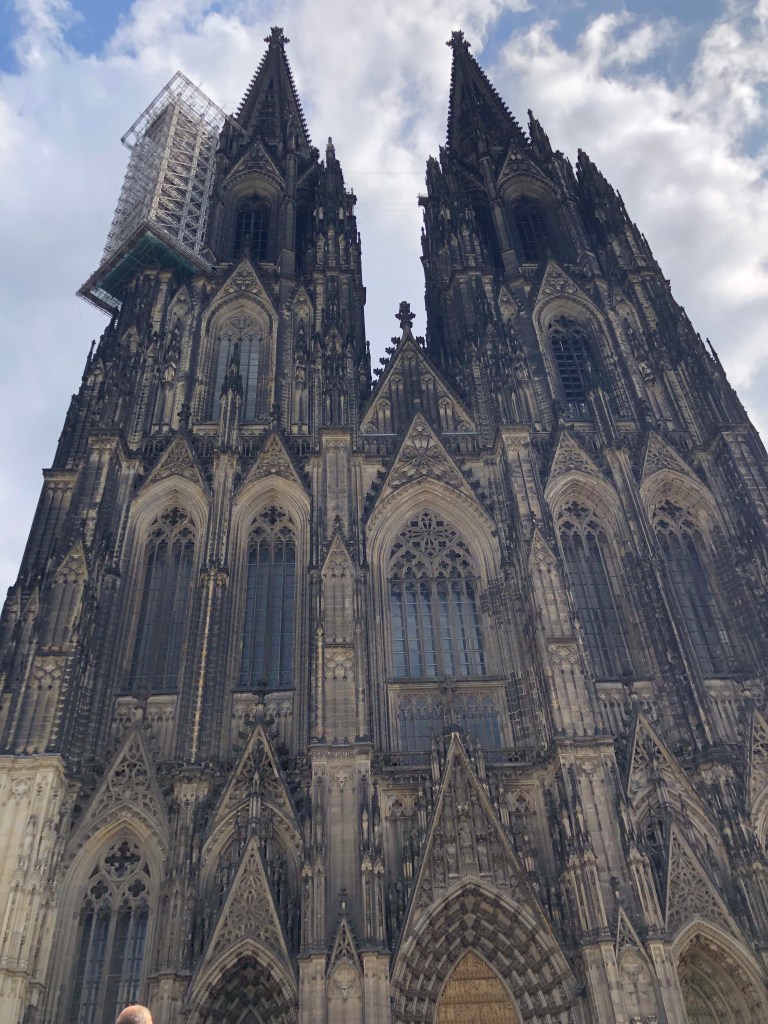
As the days drew closer and closer, my phone was blown up by WhatsApp messages from other Fulbright ETAs, excited to finally be meeting each other and to learn more specifics. I arrived at the Cologne central train station and as I walked out the door into the square, I was shocked by the massive size of the Cathedral towering over everyone. Trying to take pictures close to it is impossible just because the building is far too tall to fit into a single frame. I had to make it to the airport because that’s where we all were meeting to take a charter bus to the orientation site, so I didn’t have too long to explore.

Once I got to the meeting spot, people were excited, talking to one another; there were clearly some nerves as well, although probably stemming from excitement. We finally arrived at the orientation site, this beautiful former monastery that we would call home for the next few days. We were told that we needed to bring towels and that they wouldn’t be provided, but they did end up giving us all the basic needs such as hand towels and bed linens for our stay.

To move into the main content of the orientation, we were kept to a pretty packed schedule throughout the day. In the mornings we worked with our groups and learned the basics of teaching students with others assigned to the same German state, and then there were different types of meetings in the afternoon. Since we really only had two full days of programming, this didn’t leave too much time to rest and get to know the other ETAs during the day.

We were also divided up within our working groups to create mini-lessons to present to the class, and we were each given different age groups as well in order to keep their language skill level in mind. My group had to teach to kids from grades 8-10, and we planned a lesson around ways to get to know someone better.

While the mornings were fun, the afternoons were a little more dull. The meetings we had in the afternoon were more informational and very long. One meeting was strictly about the specifics of our grant and information about our health insurance, but almost all of the information told to us during that meeting was also written in the materials sent to us over the summer. We were given a chance at the end of the program to provide feedback, and one of the major things discussed was how boring that one meeting was, so hopefully it’s somehow changed for next year’s orientation.

There were also some other meetings, one of which was called the World Café, where we could go around and talk about different topics, like navigating cultural differences, pursuing activities in Germany and even making friends while abroad. There was also a talk on mental health, which is nice if you’re worried about moving abroad by yourself. It’s also nice in general, just in case you have a major case of culture shock and you’re not too sure how to deal with it.

While there wasn’t much time to get to know each other during the day, there was plenty of time to do that at night. After dinner ended around 8 pm, the bar at the youth guest house was open and every night it was full. It offered a few different local drinks for a very cheap price, and it was a nice way to relax after a long day of sitting through different meetings with no break. It is a great way to get to know others in the program, and for those who aren’t really into drinking, there’s also some programs planned for those who might be sober.

Overall, for those who want to know what orientation is like, it’s a few long days packed within a week, and despite some of the more boring aspects, it is really a fun experience. I think it really does prepare you for the task at hand, and it reassures those who are maybe a little anxious that there are so many friendly faces there to help you if you should ever need it. We’re all having the same, basic experience, and we’re always there to support one another if we need it. And while some of the events planned at the orientation are boring, I think the chance to meet those who will be going through similar experiences as you is the greatest thing to come out of those fews days in Altenberg. Now, as promised, here are some nice pictures from the orientation site :).

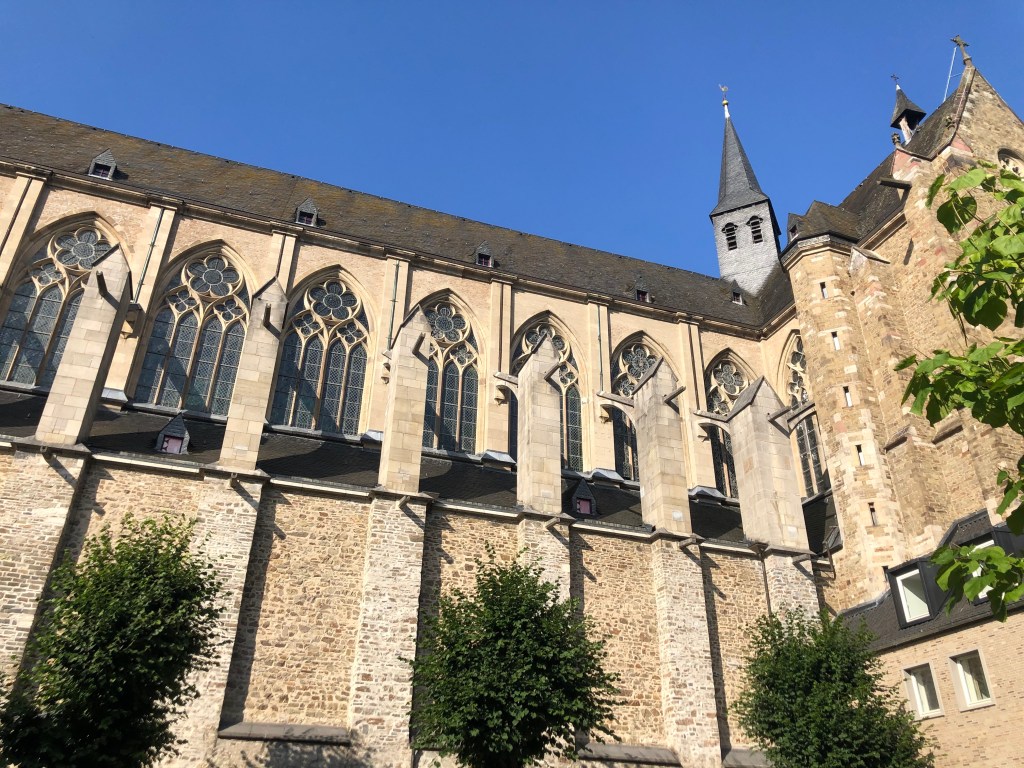
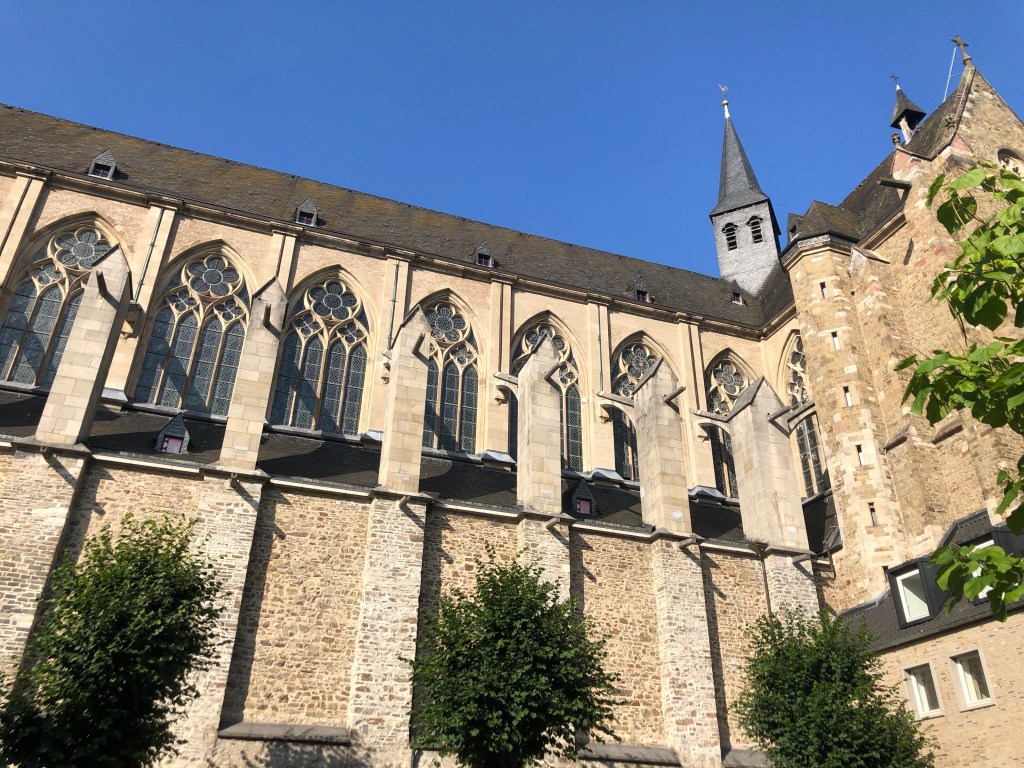
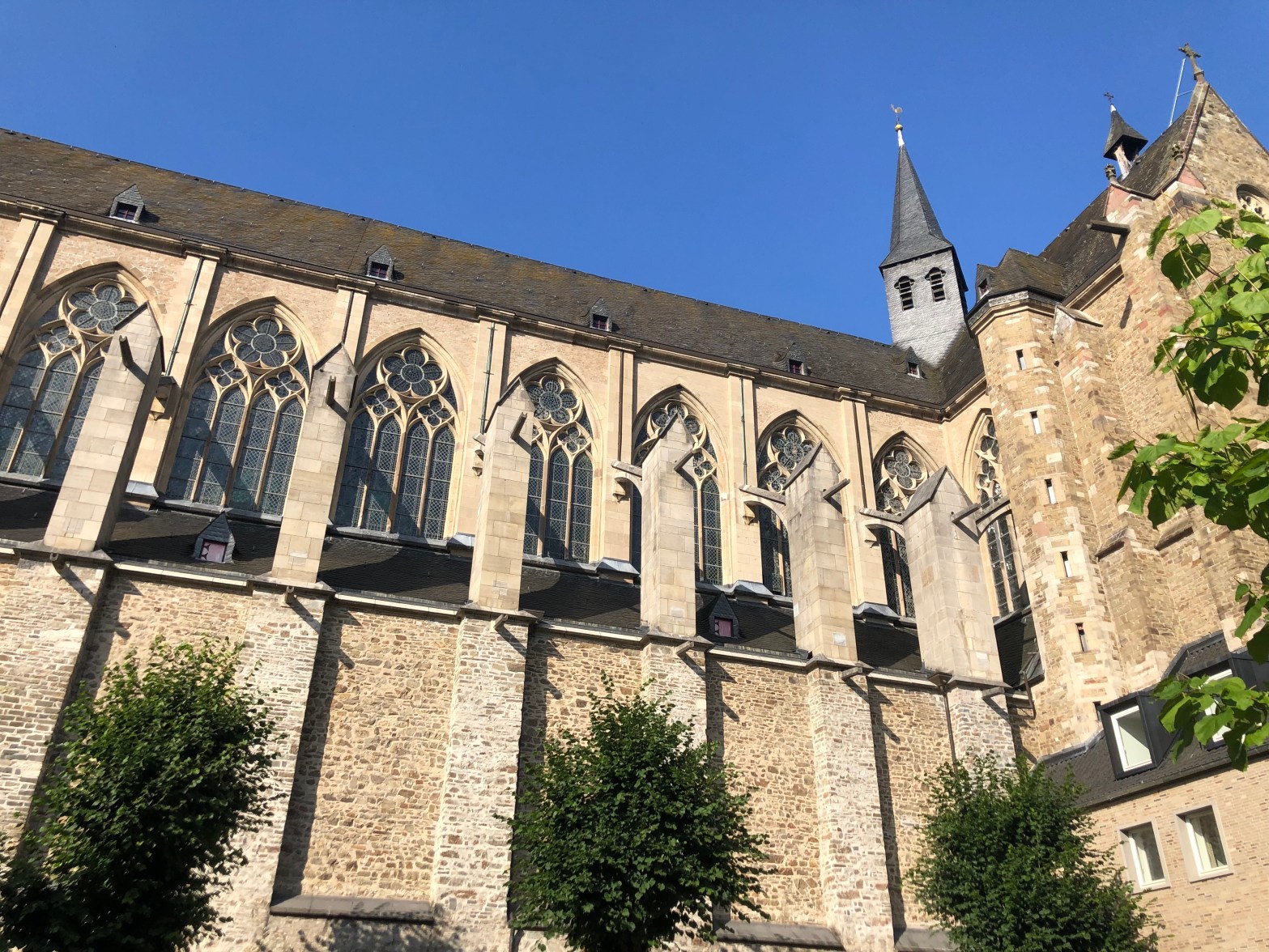
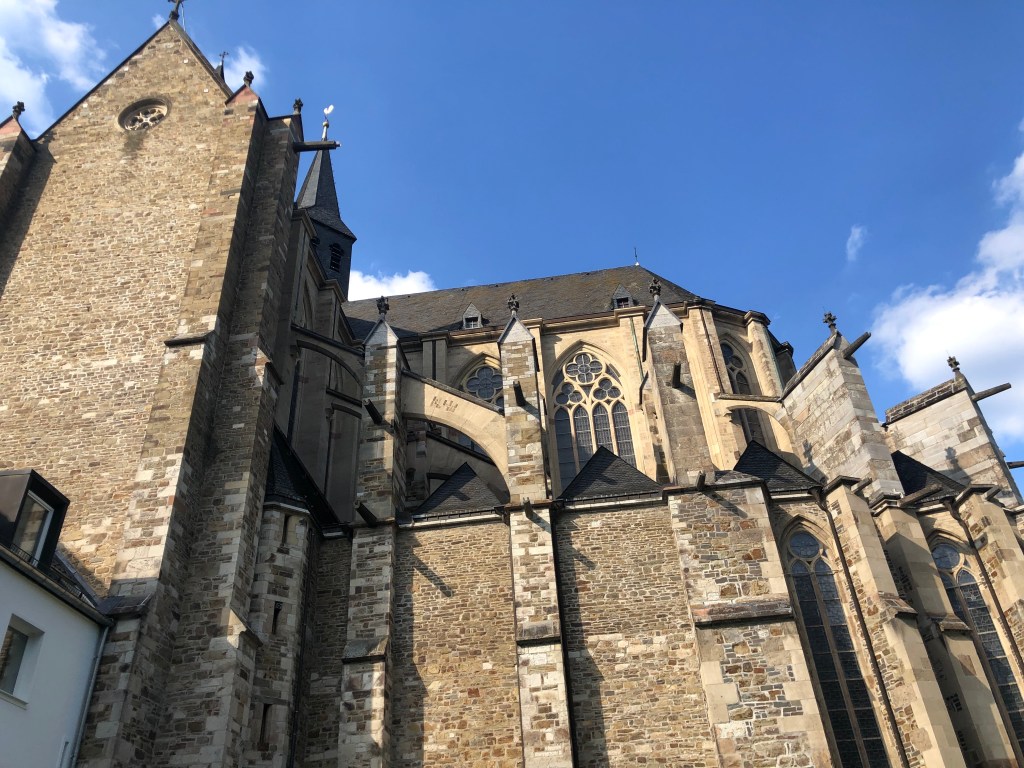
The two above images are different views of the same church at the site of the former monastery in which we stayed for the duration of our orientation.
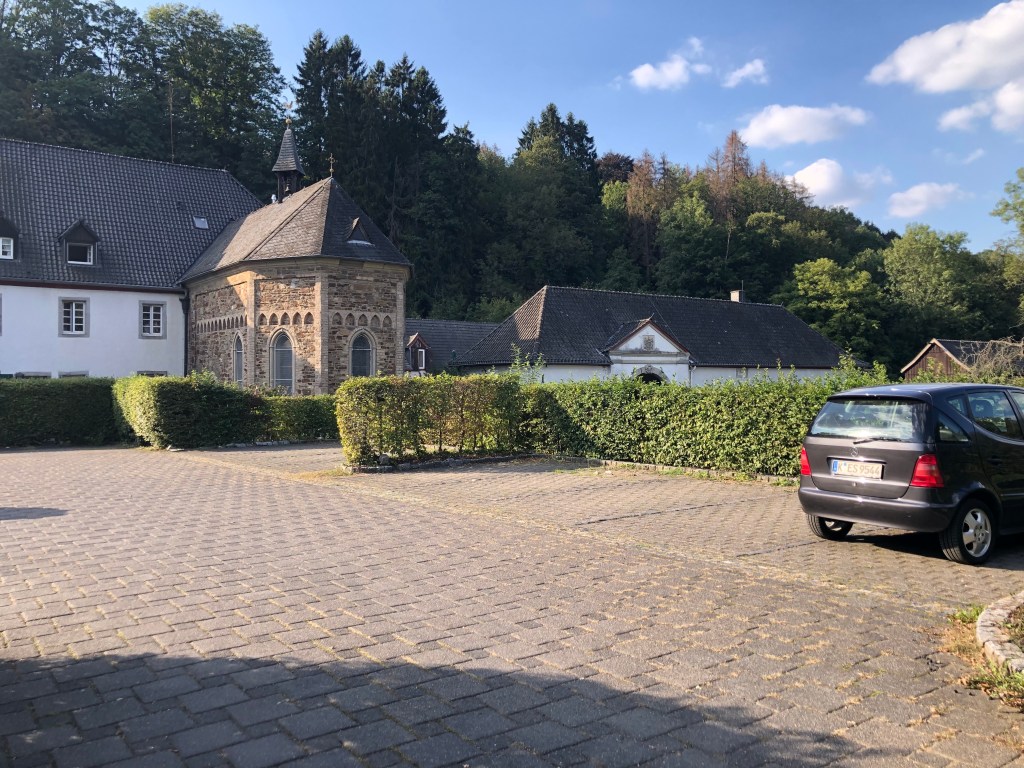
A small village located next to the larger church.
And finally, one view of the massive cathedral in Cologne. Again, these pictures are make it impossible to convey just how massive this cathedral is.

By the way, here’s a link to a video I saw about the Wolfsburg Blackbirds! If you can understand German, enjoy!

Unnecessary Travel Stresses

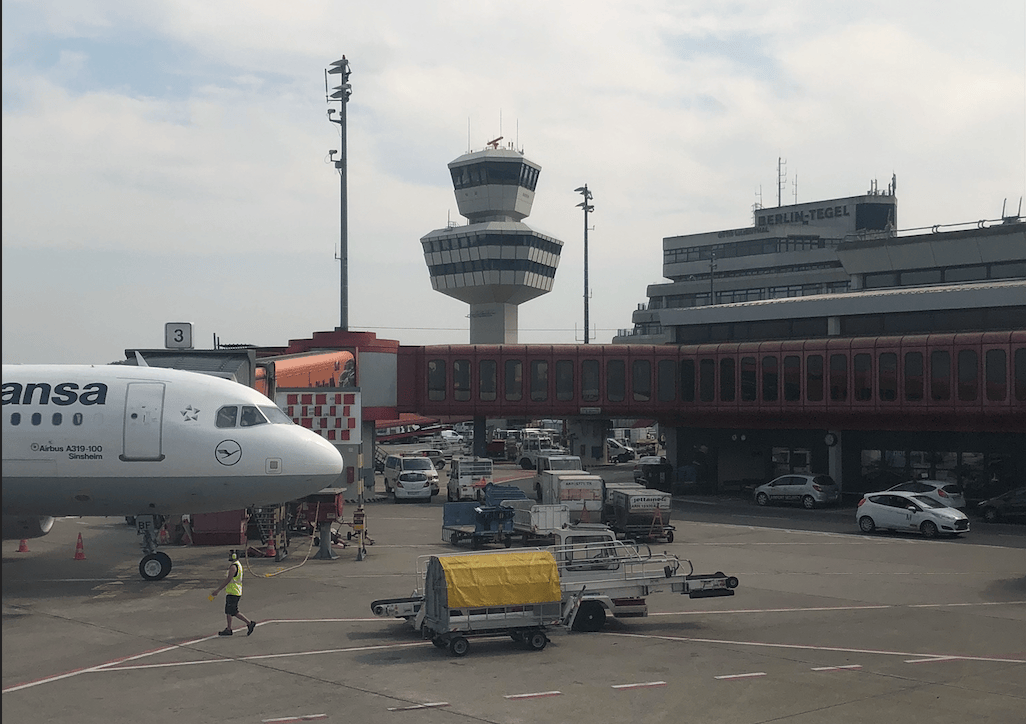
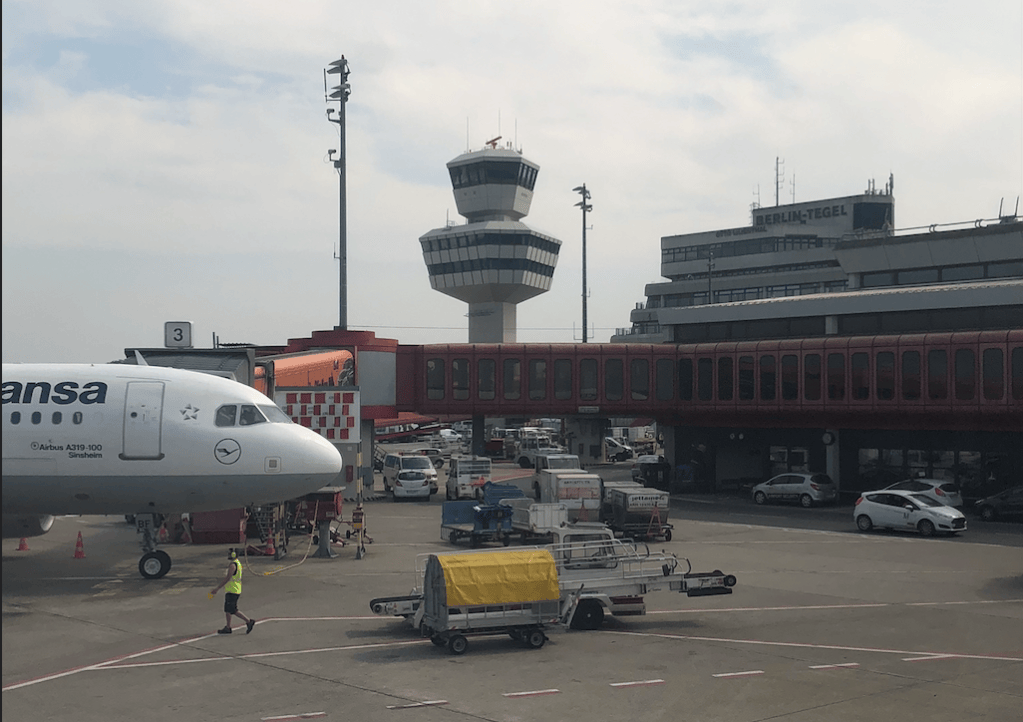
A picture of Terminal A at Berlin Tegel Airport. Berlin’s airports are outdated and not great; while the city has been trying to build a modern airport for several years, several unfortunate events have delayed the opening of the new Brandenburg Airport, which is directly adjacent to Berlin Schönefeld, to a point where it has become a farce in the eyes of the German public.

Part of the purpose for this blog post is to inform you all about being smart when it comes to traveling, and the other is to remind myself to never do what I did again. I’ve referenced them before and I’m going to do it again, but Kara and Nate are these full-time YouTube travelers that make probably some of the best travel content I’ve seen on the internet.

One of the things they do sometimes (although less often now than they did before, I believe), is they spontaneously buy flight tickets to various places and figure out accommodations afterwards. It sounds like a great way to travel and explore new places, but when you have a relatively strict itinerary, it’s probably not the best way to travel.

When I first found out where I was going to be placed during my time as a Fulbright grantee, I spent some time making travel arrangements. I booked my flight to Germany, which landed in Berlin, and then I bought a train ticket that would take me to Wolfsburg. I arranged plans with Veit to come pick me up from the train station in Wolfsburg, so in an ideal situation it didn’t seem very difficult. I also planned my trip to and from the program’s orientation site, which was in the area of Cologne.

I purchased a FlixTrain ticket to get from Berlin to Wolfsburg upon my initial arrival because that was a little cheaper than the German train company called Deutsche Bahn. If it were an ideal world, catching my train wouldn’t have been very difficult. However, the world is far from ideal.

None of my flights were delayed, luckily, but my train connection was within an hour and a half from when I landed. The bags took a little longer than I expected them to come out (because Tegel Airport and airports in Berlin in general are terrible), and I ended up only having about an hour to get to the train station. This wasn’t the worst itinerary, considering Tegel is only a half hour away from the central train station (Hauptbahnhof), where I had to catch my train to Wolfsburg, but it still felt like I had to rush a little to get there.

Fast forward one week to my trip to Spain. I had booked a spontaneous trip to Madrid to visit friends, as I explained in my update post. My flight to Madrid was simple enough, and I was able to get from the train station to Tegel with plenty of time to spare. However, I didn’t book any way for me to get back to Wolfsburg after my return flight. While I thought to myself, “I can just take a train after my flight, it shouldn’t be a big deal,” I should have actually looked to see what my options actually were.

When I looked on the Deutsche Bahn’s website the day of my flight, only then did I realize that no train’s went to Wolfsburg after 9 pm. I made different arrangements based on my flight itinerary to get a train to Magdeburg, a different German city that was only an hour away from Wolfsburg, and booked an Airbnb there, because ultimately that was cheaper than staying in a last-minute hotel room in Berlin, the party capital of the world, on a Saturday night. The train was far enough away from my landing time that I should have had some time to wait at the train station before boarding my train.

But then, after I bought this backup train ticket and non-refundable Airbnb, I got a notification from my airline, EasyJet, that said my flight would be delayed by about an hour, which gave me only about 40 minutes to get to the train station. I tried to call the airline to see if there was any type of reimbursement if I missed my train because of the delay, and on the phone they said they couldn’t help me because the delay wasn’t more than three hours. When I went to the airport in Madrid and asked again, they gave me a reimbursement form. There was definitely something that wasn’t understood by the agent when I called earlier, but that’s beside the point.

Anyway, once I got on the plane, I made a plan to try to get to the train station as fast as possible. I got on the bus as quickly as I could, and was able to make it to my platform with 10 minutes to spare.

Then, one week later on my way back from my orientation I had a similar problem, but this one was more of my own doing. I booked a flight from Cologne, where my orientation program took place, to Berlin, and booked a Deutsche Bahn train from Berlin to Wolfsburg. I did this around the time when I found out where I was placed, so this itinerary was pretty set in stone. The transfer time I had from the airport to the train station was around an hour and 15 minutes, which, at first, I thought wouldn’t be a big deal. What I only realized after the fact was that my Ryan Air flight would be landing at Berlin Schönefeld, which, with public transportation, is about 50 minutes outside of the city. Again, if everything went perfectly I would make my train, but also, I was leaving things up to chance.

When I landed at Schönefeld I literally ran from the bottom of the steps on the tarmac to the Schönefeld train station, bought my ticket, and was just able to get on the regional train to take me to the central train station, where my Deutsche Bahn was. What was supposed to be about a 7-minute walk turned into a three-minute run from the airport terminal to the airport’s train station.

I had to get off at the East Train Station (Ostbahnhof) and switch to an S-Bahn (the street train). But here, the signs weren’t very clear which platform my S-Bahn was going to be on, so I missed that train. Luckily, another train that went in the same direction came a few minutes after that, and I was able to reach my train to Wolfsburg with 5 minutes to spare.

So, when it comes to traveling under a certain itinerary (I had to get back to Wolfsburg on the last day of orientation because I had to go into THG early the next day), it is SUPER IMPORTANT to plan your travel accurately. This probably was something that I should have known already, and I thought I did, but there were things I didn’t take into consideration. For Spain, I didn’t realize that I couldn’t take a train to Wolfsburg from Berlin after a certain hour. Coming back from orientation, I had forgotten about how long I would actually need to transfer from Berlin’s other airport to the train station.

If I had taken the time to plan out all the logistics accordingly, which I thought I had done, instead of speeding through the trip planning without any review about the itinerary is comfortably possible, I could have saved myself from a huge headache, and maybe, more importantly, saved money. Many European cities have airports that are relatively far from the city center, like Budapest, for example.

One last thing. This was something I knew, but yet another thing I overlooked. I arrived back in Wolfsburg on a Sunday when I traveled to Spain, which is the day when all grocery stores are closed in Germany. And after having spent a week in Spain, there was nothing good left in the fridge. Again, something that could have been avoided and where I could have saved money if I had properly planned.

So, even though you can’t plan for everything (you might face some delays in flights, for example), really try to plan what you can so that you don’t have such crazy transfer stories like I did within the span of three weeks. It’s certainly cheaper and much more enjoyable when you don’t have to stress about making your next flight/train.

A Quick Update

Just to start, I just want to apologize to everyone and myself for not writing for so long. It’s been a pretty hectic couple of weeks, and today’s actually been the first day that I’ve had to just sit and relax, so let me catch you all up on what has been going on:

  • Two weeks ago, I flew to Madrid to visit friends and to explore a new place. However, the way back was a little stressful (more about that experience later).
  • I had one day to relax and repack my bags before getting on a train at 8 am and riding for four hours to Cologne for my orientation program, leaving me little time to write.
  • Each day during that week was jam-packed with different meetings, and not too many breaks. While it was all fun and helpful, it was a little stressful since we didn’t have too much time to rest (again, more on this later).
  • I returned to Wolfsburg on Thursday night and woke up bright and early for my first day seeing classes at THG. I went to the grocery store to get food for the next few days because grocery stores are closed on Sundays here (more on that later).
  • That evening I went to baseball practice to get some ground balls at third base (a position I don’t normally play).
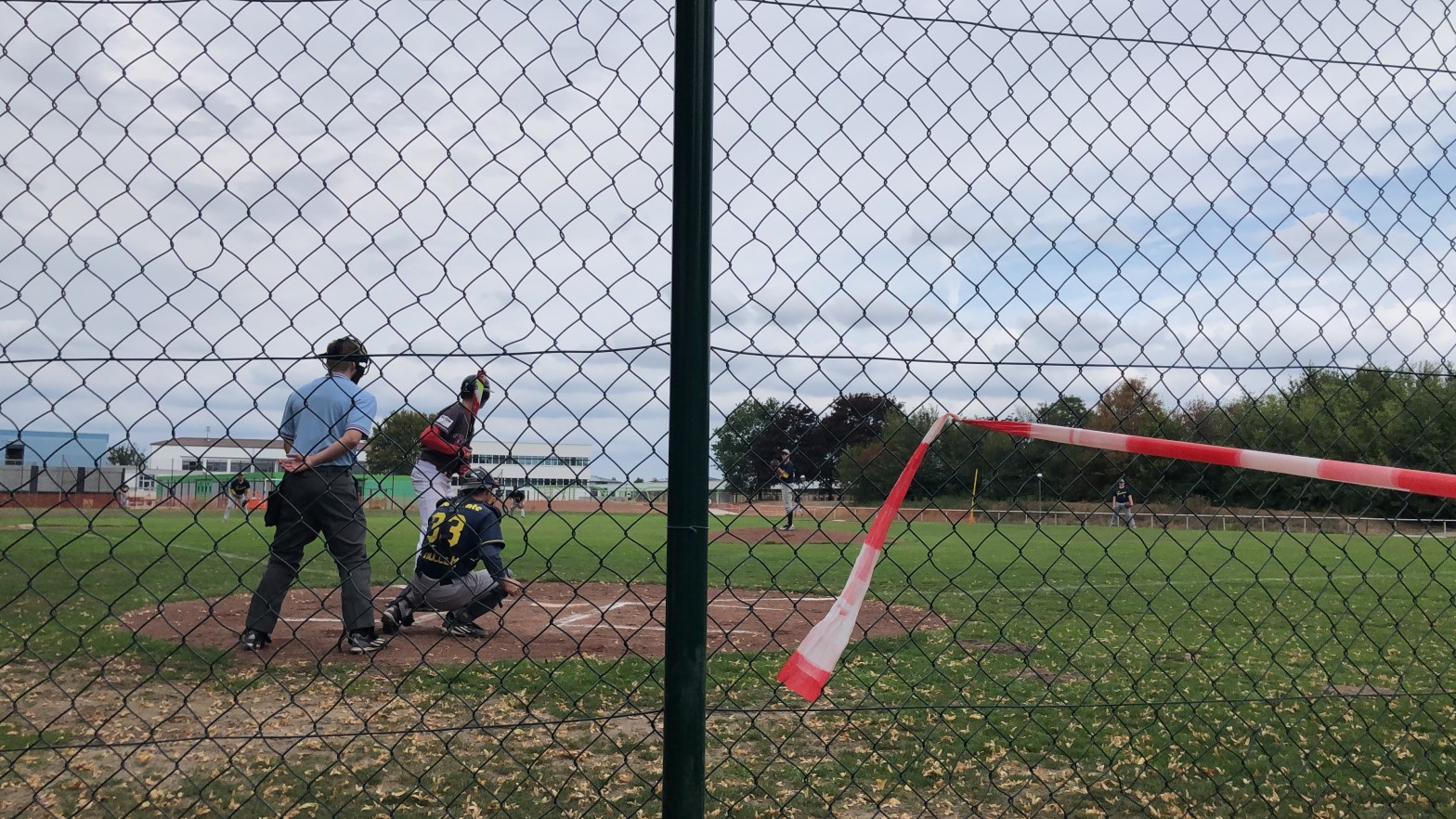
  • Yesterday, I played with the first men’s team of the Wolfsburg Blackbirds and I had a really great game, and we ended up winning 28-8. While the game ended earlier because of a mercy rule, it was still a lot of fun.
  • And finally, last night I went to a small Oktoberfest hosted next to VfB Fallersleben. There was beer, meatloaf sandwiches, German Schlager music, dancing, and carnival games, and I’m glad I didn’t have to go all the way to Munich to experience it.

I do have more blog post topics in mind, but they need a little time to plan and write, which means my next one probably won’t be ready until tomorrow, so stay tuned! In the meantime, here are some pictures from the past two weeks.

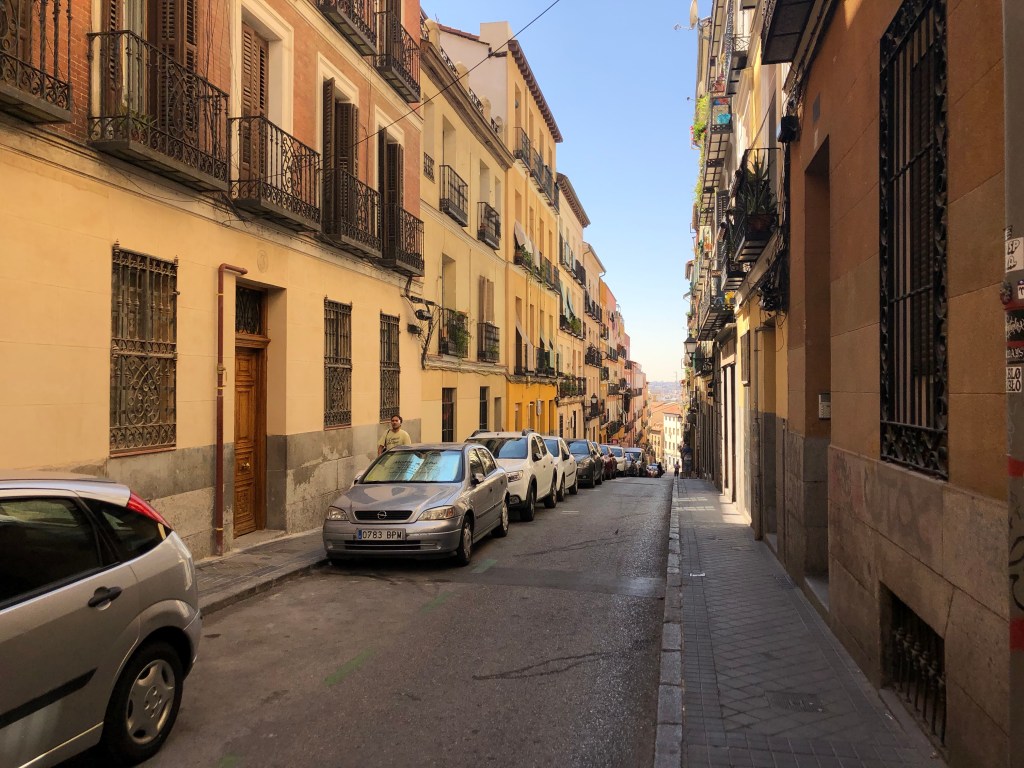
A narrow street in Madrid.
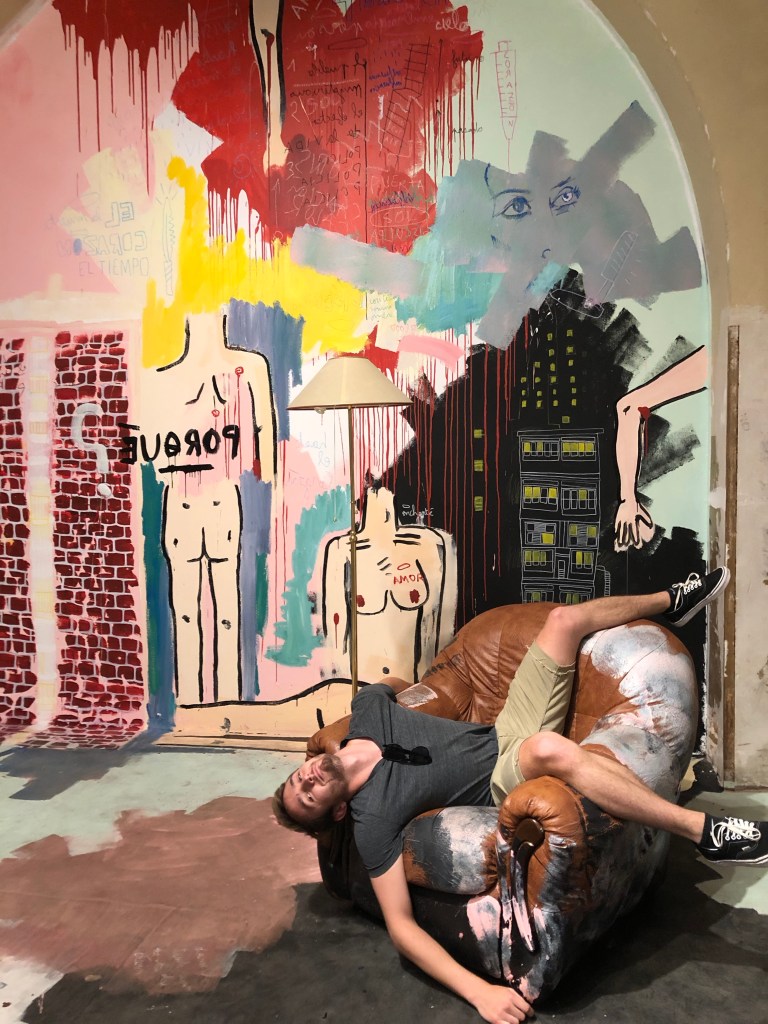
A temporary exhibit in La Tabacalera in Madrid. I’m not sure if I made it better or worse :).
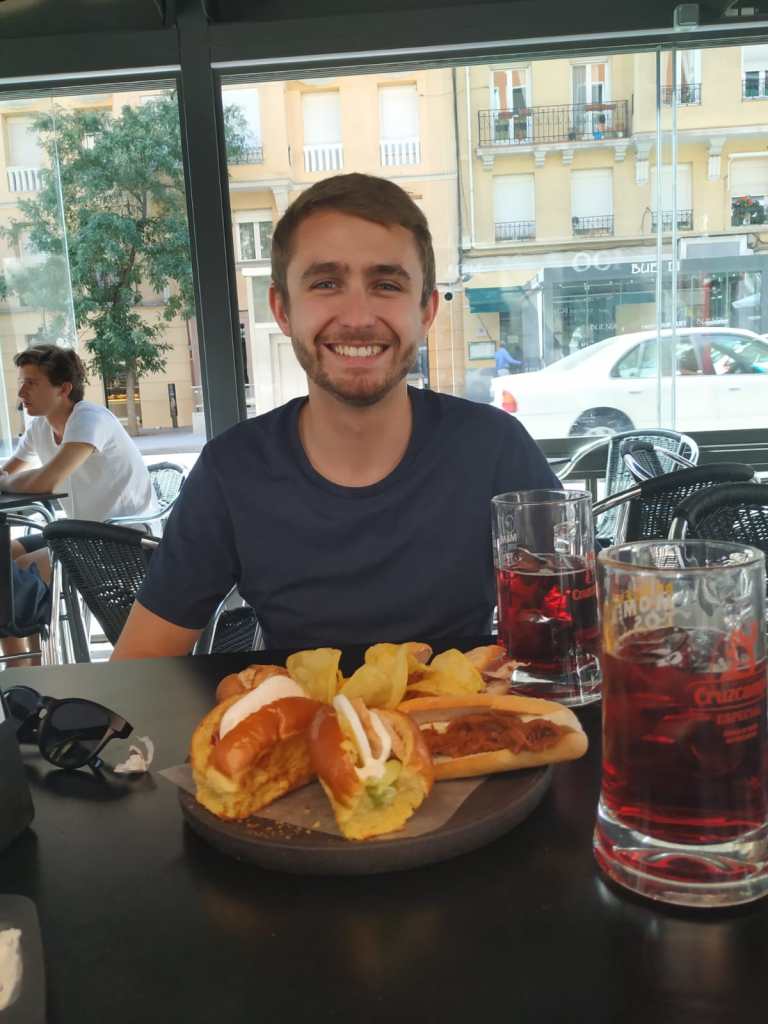
Some food at 100 Montaditos in Madrid.
The church next to the Jugendgästehaus where we had our orientation program in a town outside of Cologne called Altenberg. The facility was part of an old monastery that was renovated for hosting large groups of people.
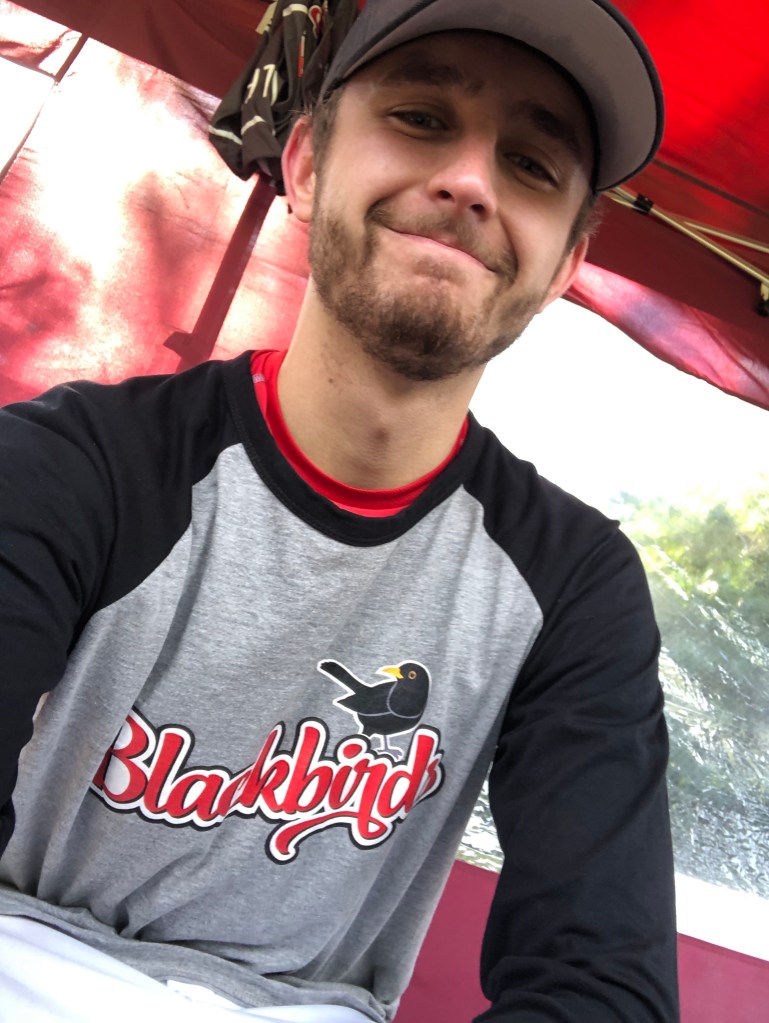
Me, moments before playing in my first baseball game in Germany.

The Wolfsburg Blackbirds

For general privacy, last names are withheld from this blog post.

I finally arrived in Wolfsburg on Monday and it’s already been an amazing, and maybe a little bit of a hectic week. I’ve already seen how different some parts of the city can be, and I’ve learned a bit of the history around the creation of the city. But this post won’t be about any of that. I want to share the story of one of the coolest things I have learned about this city so far, and that’s the story of the Wolfsburg Blackbirds.

There’s one thing that I’ve known about Germans since I started learning the language in school, and that is that they like to be active. Whether it’s going for a run, riding a bike, swimming in a lake, going skiing or playing soccer, I have seen firsthand that if there is good weather, Germans like to take advantage of it and spend their time outdoors. And although I would say that some of the more popular team sports in this country are soccer, basketball and team handball (as opposed to American handball; and yes, there’s a difference) I was surprised to find that after a quick Google search that there is, in fact, a baseball club in this city called the Wolfsburg Blackbirds.

Earlier this summer, I was electronically introduced to Veit, who would be my point person for my first few weeks at my new school, the Theodor-Heuss-Gymnasium (THG). I was excited to find out that Veit was a fan of baseball, following his passion for soccer, and through our initial correspondence I learned that he worked closely with the Blackbirds as a club manager and supporter. I had already been excited to learn more about this club, and baseball in Germany in general, and he was kind enough to put me in contact with one of the players, as well as founder of the club, Steffen.

Some time later, Steffen reached out to me via email to invite me for coffee and to attend the first team’s training session afterwards. We set a time and date, and this past Thursday he met me at my shared apartment and we went into the city center to a café he visits regularly, one of which he’s friends with the owner.

Steffen and I sat outside, we both ordered a coffee, his black and mine with a touch of milk and sugar, and he began telling me more about the story of the club.

After a quick Wikipedia search I can tell you that baseball in Germany had a relatively early start, with the first games being played in 1936, but the sport had its initial start in Wolfsburg more than 25 years ago according to Steffen. There were several baseball teams back then, either five or six, but Steffen wasn’t exactly sure of the number. Back then these teams had sponsors from some city businesses, which accounted for most of their funding, as entry to watch games here are free up until a club reaches the Bundesliga, the highest level of play in the German system. However, once VfL Wolfsburg, the city’s soccer club, was promoted to their Bundesliga in 1997, sponsors began leaving these baseball clubs for the more popular soccer team, leaving all of these teams with no choice but to shut down due to bankruptcy.

Enter, Steffen. Veit told me that one day, Steffen, one of his oldest friends, had the idea to bring baseball back to Wolfsburg, and out of nowhere came up with the idea to start a new club. So three years ago, he got to work to make this dream a reality. He was able to get into contact with several people about his idea, knowing many because he grew up in Wolfsburg. Some people he knows that own local businesses in the city have provided the club with funds through sponsorship deals. He was able to strike a partnership with a sports club in one of the older towns/parts of the city, VfB Fallersleben, and used funds he accrued to turn an old soccer field into a baseball field.

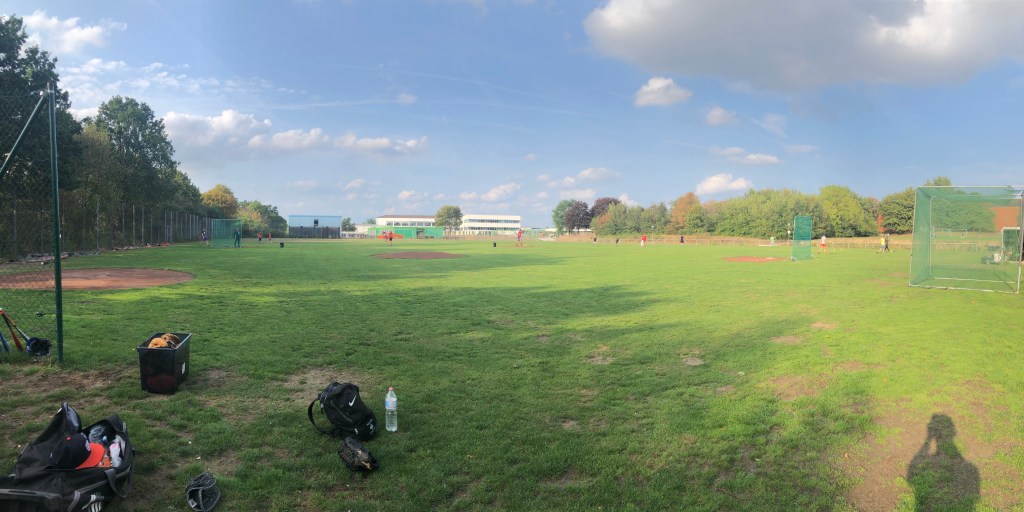
The baseball field at VfB Fallersleben, home of the Wolfsburg Blackbirds.

The field has a raised mound, which is, from what I learned from Steffen, uncommon in amateur German baseball fields, and the infield grass is well-groomed. One problem that does exist, however, is that the fence in right field is too close to home plate, meaning that for a certain stretch of that fence, yellow poles have to be erected in order to show that balls hit beyond this part in the air are not considered a home run, but rather a ground-rule double. Steffen is currently working with people to build a new baseball field for the club in the next two to three years. This way, if the team is promoted to the Second Bundesliga, the step before the highest division of German baseball, they will be able to join that league because the rules require a fence at least 85 meters (approx. 279 feet) from home plate in left and right field.

Despite these minor issues, I was extremely impressed to see the quality of the field and the dirt around the bases and for the pitcher’s mound. And what was more impressive to see was that around the same number of kids (around 25-30) were playing baseball as there were kids playing soccer at the adjacent field. There are enough players to make a youth team, and due to the fact that only one baseball field in the city exists, this team plays on the full-sized field that the two adult teams play on as well.

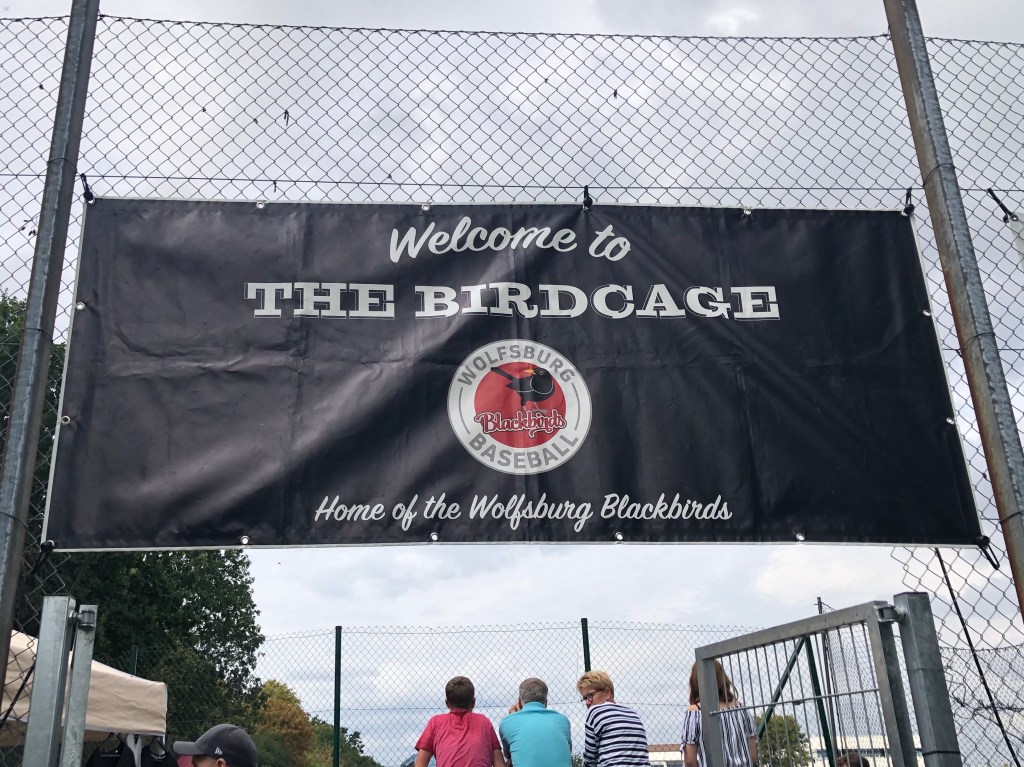
On Sunday I was fortunate enough to watch the second adult team play after the first team’s game on Saturday was cancelled. Upon my arrival to the field, I was welcomed by this sign hung above the main entrance, setting a welcoming tone to my game day experience at the “Birdcage.”

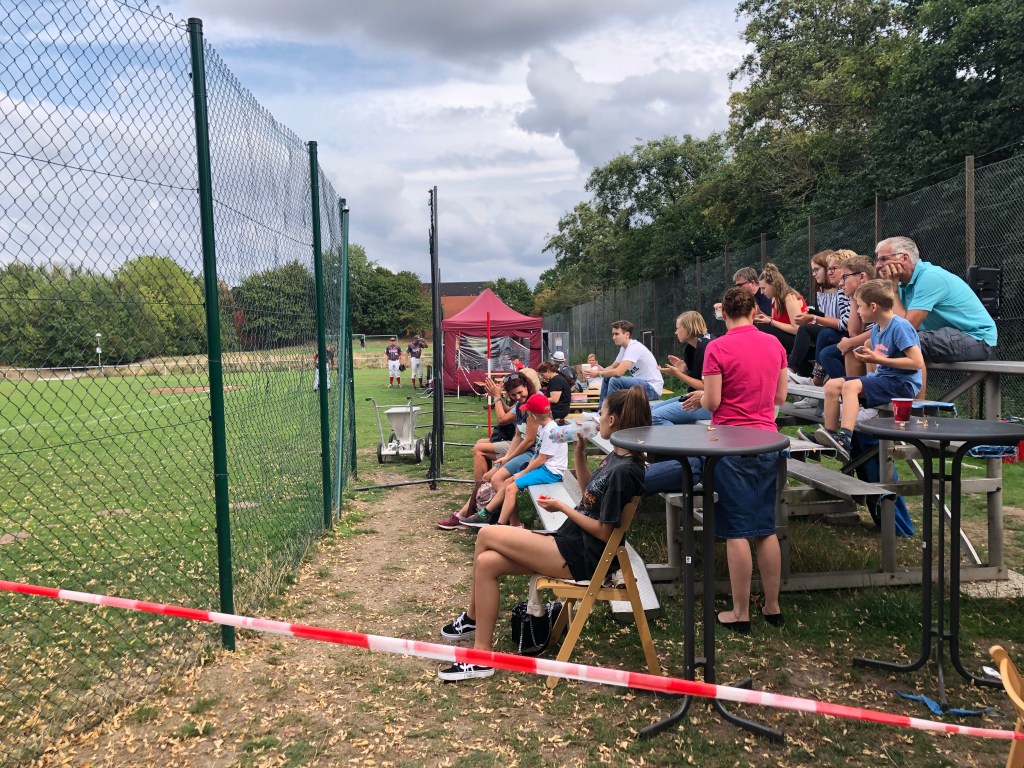
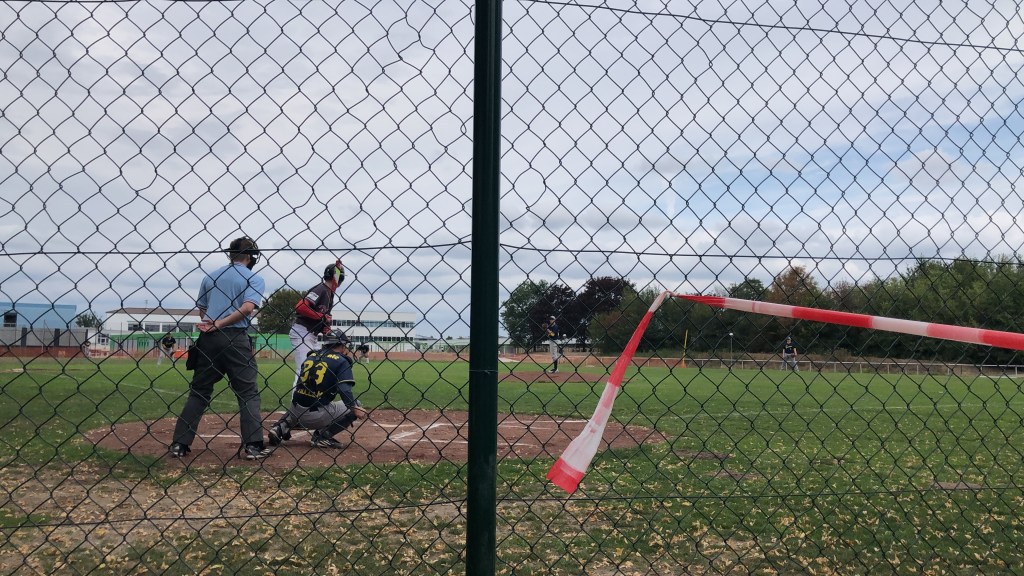
Everything done here is intended to create a fun, relaxing atmosphere to watch a baseball game. At first you’re welcomed by the above sign, then the view opens up to the field, lined and ready to host the game. To the left is a concessions stand with so-called “fair price” concessions, where people are encouraged to pay what they wish for food or drinks. To the right are some stands, as well as several tables and benches for people to sit and relax while watching the Blackbirds play. And, if he himself isn’t playing, Steffen provides some exciting commentary to explain what exactly is going on during the game for people that might not know how the game works.

It was a genuine, fun atmosphere: something far more laid-back than watching a contentious soccer match in a stadium. People chat with one another, both home and away fans, and it really feels as though you’re watching together as a family (probably because most of the fans are related to the players). However, this case is different when the first team plays, as Steffen has told me. The fans are not only family members, but also friends and others who enjoy a bit of baseball, which creates quite a sizable crowd. And for a country that doesn’t have such a large baseball following like the United States, it was really nice to see just how well this club is doing and how hard it works to generate a baseball following in the city.

I’m happy to have gotten to know the club so well over the last few days, and to know that Steffen, with the help of those who share his love of the game, is doing what he can to increase the sport’s popularity among the city’s youth and draw interest from people of all ages in the city. I’m also excited to say that next spring I’ll likely be out on that field playing with the others as a Blackbird, and even have the opportunity to share what I know of the game as a youth coach as well. After this week’s adventure, I’m excited to find out what other things this city has to offer to those who look for them.

If you want to take a look at the Blackbirds’ webpage, you can find it in the links below. Fair warning: the page is entirely in German!

Links

It All Started with a Passion

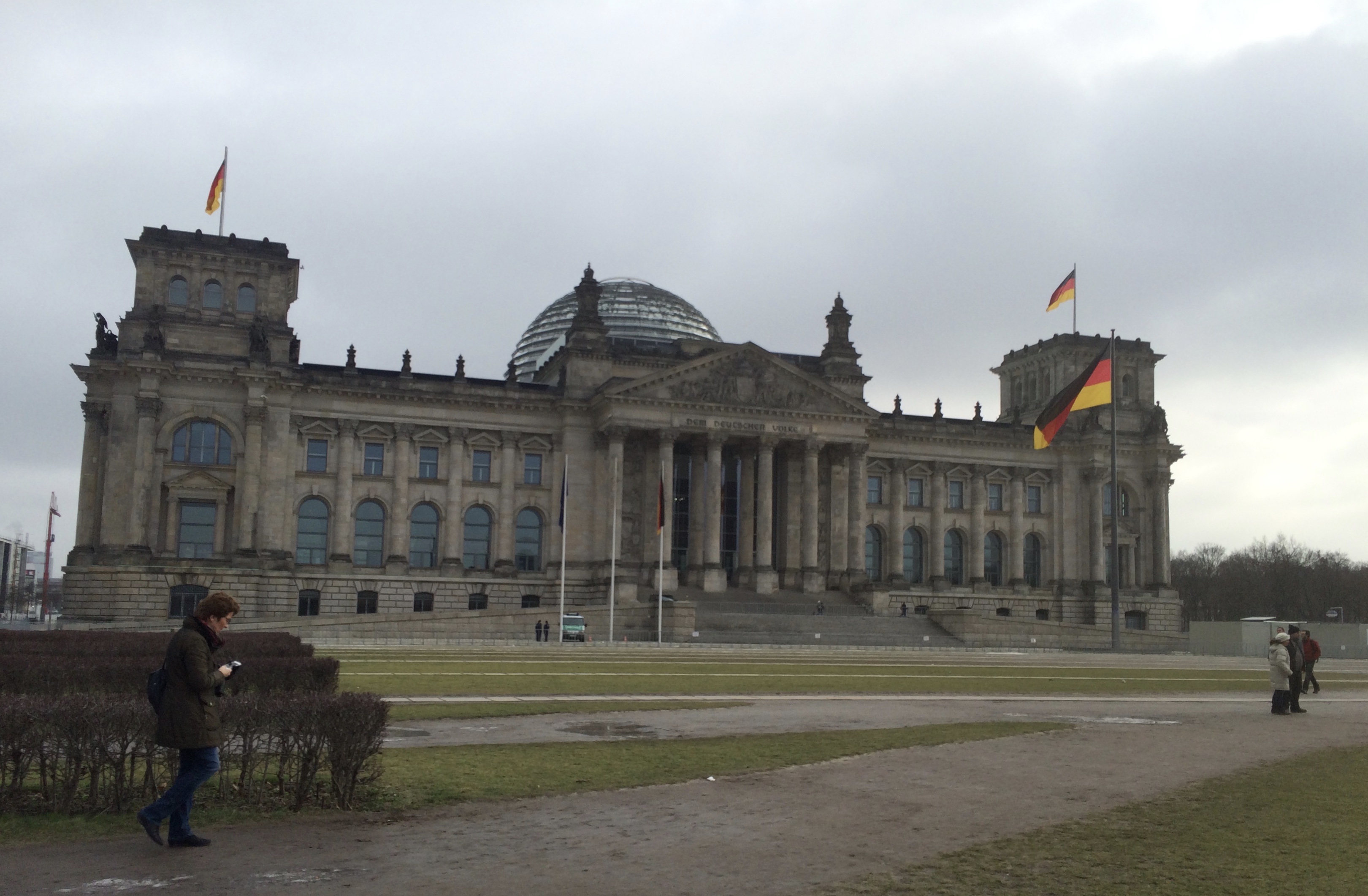
The Reichstag, the main legislative building for the German government.
This is a short introduction to my blog, which includes my motivation to create this blog, as well as why I am embarking on this journey.

For those of you who don’t know me very well, my name is Tommy and I grew up in a dual-language home. My dad is American and lived his childhood in a rural town in Connecticut, and my mom, now also an American citizen, was born and raised in the Hungarian capital city, Budapest. I am a citizen of both countries, and have grown up speaking both Hungarian and English.

I know that this doesn’t necessarily mean that I would have a natural inclination to be fascinated by languages, but it was a good environment in which one could be nurtured. I remember times when I was younger when I would look up how to say things in different languages for no particular reason, simply because I was curious.

In elementary school, my classmates and I learned in music class how to sing Silent Night in German, which made me wonder how songs in different languages sounded. In middle school, I was eager to begin learning a foreign language and decided to choose Italian as my first venture, straying away from the much more popular Spanish and French. And during my sophomore year of high school after transferring to Phillips Exeter Academy, I was forced to start learning a new language as Italian was only offered as an accelerated course for seniors. Out of a long list that I won’t delve into here, I chose German because I thought it would be a greater challenge, but not overwhelming due to simple similarities in vowel sounds it shared with Hungarian.

During my time at Exeter, I was fortunate enough to receive a substantial scholarship, which enabled me to take advantage of probably one of the best study abroad programs a high school could offer. I was able to spend two months during my senior year living with a German family kind enough to house me (Noch mal vielen Dank, und ich freue mich darauf, euch zu sehen!), and I took classes at a Gymnasium (high school), completely immersed in a German-speaking environment.

I’ve now been learning German for more than seven years and have successfully completed a major in German Language and Literature at Tufts University, which has allowed me to turn my curiosity for other cultures and languages into a passion. I even started to learn Spanish during my final semester partly to fulfill a course requirement, but more seriously to further nurture that very passion.

So, for those of you who DO know me well, you all know that it has been my dream since I boarded my flight from Frankfurt back to Boston to return to Germany and to live there for an extended period. Those two months were far too short! And now I have that opportunity.

I applied for a few programs in which I would be able to teach English in both Germany and Austria, and was fortunate enough to be selected as an English Teaching Assistant as a part of the Fulbright Program, where I will be living in Wolfsburg, Germany for a 10-month period. I am extremely honored and excited for this amazing opportunity, one which certainly won’t go to waste.

This blog is intended to provide those who are considering applying for a Fulbright award with some insight into what the program and the general daily routine is like (with a Germany-centered perspective, of course), as well as allow me to reflect on my own experiences as a teacher. Who knows, you may also learn a little German by reading this if you don’t know some already!

And for those who are about as in love with traveling and experiencing new cultures as I am, I’m planning on writing and sharing plenty of those stories as well. I’ve been inspired by content creators such as Kara and Nate, Simon Wilson and ClickforTaz on YouTube (links down below) to try new things and to share those experiences with others. While they choose to share through video content (and are seriously good at it!), I frankly don’t think I have the skill or equipment available to do something like that yet, and so I decided to give blog posting a shot.

If you want to continue reading these updates, please subscribe by entering your email on the homepage! Thanks for reading, and I hope you follow me through this incredible experience!

Check out these YouTube channels for cool travel videos if you’re interested!

Design a site like this with WordPress.com
Get started